

In today’s digital marketplace, Local SEO for Small Business consumers no longer flip through yellow pages or drive aimlessly to find nearby services. Instead, they whip out their smartphones, type a quick query like “best plumber near me” or “coffee shop open now,” and choose from the top results. If your storefront or service area isn’t appearing at the very top of those search engine results, you are handing paying customers directly to your competitors. Implementing a robust strategy for local SEO in small business is no longer optional—it is the ultimate engine for sustainable growth, foot traffic, and community authority.
Understanding the Landscape of Local SEO in Small Business
Before diving into advanced tactics, we must define what makes local SEO in small business unique compared to traditional global or national search engine optimization. While standard SEO focuses on ranking for broad keywords worldwide, local SEO optimizes your digital footprint so that search engines like Google display your business prominently when nearby users look for your specific offerings.
Why Local Search Matters for Mom-and-Pop Shops
Statistics consistently show that a massive percentage of local searches result in an immediate store visit or phone call within 24 hours. When a user searches for local SEO in small business solutions or looks for a physical service provider, their purchase intent is remarkably high. They aren’t just browsing; they are ready to buy, book an appointment, or walk through your doors. By focusing on local SEO in small business, you level the playing field against massive national conglomerates, capturing high-converting traffic right in your backyard.
Core Pillars of Local SEO in Small Business Success
To achieve top rankings in local search result pages (SERPs) and the coveted Google Local Map Pack, you need a multi-faceted approach. Let’s break down the foundational pillars that drive local SEO in small business visibility. 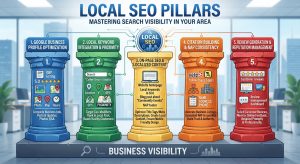
+——————————————————-+
| LOCAL SEO PILLARS |
+——————————————————-+
| 1. Google Business Profile Optimization |
| 2. Local Keyword Integration & Proximity |
| 3. On-Page SEO & Localized Content |
| 4. Citation Building & NAP Consistency |
| 5. Review Generation & Reputation Management |
+——————————————————-+
1. Optimizing Your Google Business Profile (GBP)
Your Google Business Profile is the absolute cornerstone of any successful campaign for local SEO in small business. Formerly known as Google My Business, this free tool controls how your enterprise appears on Google Maps and local search panels.
- Claim and Verify: Ensure you own your listing and that all physical addresses or service areas are correctly verified.
- Complete Categories: Select a primary category that best defines your core offering, followed by precise secondary categories.
- Operating Hours & Attributes: Keep your hours updated, especially during holidays, and add relevant attributes (e.g., wheelchair accessible, woman-owned).
- High-Resolution Visuals: Regularly upload photos of your team, products, storefront, and completed projects to build trust.
2. Mastering NAP Consistency and Local Citations
NAP stands for Name, Address, and Phone number. Search engines crawl the web to cross-reference your business details across various directories, review sites, and social media platforms.
For optimal local SEO in small business performance, your NAP data must remain 100% identical everywhere it appears online. If your website lists “123 Main Street” while Yelp lists “123 Main St. Suite 4,” search engine algorithms get confused, diluting your local authority and harming your rankings.
Keyword Strategy: Integrating Local SEO in Small Business Terms
A successful keyword strategy requires understanding user intent and geographic modifiers. When executing local SEO in small business campaigns, you must target terms that combine your industry service with your target city, neighborhood, or region.
Finding the Right Local Keywords
Instead of targeting ultra-broad phrases like “marketing agency,” focus your local SEO in small business efforts on hyper-targeted variations such as “digital marketing agency in Austin TX” or “affordable web design for small businesses in downtown Austin.”
- Geo-Modifiers: Always include city names, zip codes, and regional landmarks in your content.
- Long-Tail Phrases: Answer specific questions your local customers are asking.
- Voice Search Optimization: People phrasing queries into Siri or Google Assistant often use conversational language, making natural phrasing essential for local SEO in small business growth.
Technical and On-Page Optimization for Local Dominance
Once your foundational profiles and keywords are aligned, you must optimize your website’s internal architecture to support your local SEO in small business objectives.
Structuring Your Website for Local Search
Every service area or physical location you operate should ideally have its own dedicated landing page. Avoid cramming multiple cities onto one generic page.
- Title Tags and Meta Descriptions: Ensure your primary term—local SEO in small business—and your target location appear naturally within your title tags and meta descriptions.
- Schema Markup: Implement LocalBusiness schema markup code on your website. This structured data helps search engine crawlers easily identify your business address, operating hours, geo-coordinates, and customer service contacts.
- Mobile-First Responsiveness: Most local searches happen on mobile devices while users are on the move. Fast loading speeds and seamless mobile navigation are critical requirements for local SEO in small business triumph.
Generating Reviews and Building Local Authority
Trust is a major ranking factor in modern search algorithms. Search engines reward businesses that have active, positive engagement from real local customers.
How Reviews Fuel Local Rankings
Encouraging satisfied clients to leave positive reviews on your Google Business Profile directly boosts your click-through rate and signals high quality to search crawlers.
- Prompt Follow-Ups: Send automated or personal follow-up emails shortly after a service is rendered, inviting clients to share their feedback.
- Professional Responses: Always reply to both positive and negative reviews promptly and professionally. This demonstrates active management and genuine customer care, reinforcing the effectiveness of your local SEO in small business roadmap.
- Local Link Building: Partner with nearby businesses, sponsor community events, or collaborate with local bloggers to earn high-quality backlinks from regional websites.
Measuring Success and Tracking Key Performance Indicators
You cannot improve what you do not measure. To ensure your investments in local SEO in small business strategies are paying off, track the right analytics metrics over time.
Essential Metrics to Monitor
- Map Pack Impressions and Views: See how often your Google Business Profile appears in local map results.
- Direction Requests and Phone Calls: Track direct actions taken straight from your listing.
- Organic Traffic Growth: Use tools like Google Analytics to monitor visitors landing on your local service pages.
- Keyword Rankings: Keep an eye on how your target phrases move up the rankings in your specific geographic target zones.
Conclusion
Mastering local SEO in small business environments takes patience, consistency, and a clear understanding of what local consumers and search engines desire. By claiming your Google Business Profile, maintaining strict NAP consistency, optimizing your website pages with localized content, and earning glowing customer reviews, you can capture high-intent traffic and secure long-term market dominance in your community. Start implementing these proven strategies today and watch your local customer base expand exponentially.
Frequently Asked Questions
What is the most important factor in local SEO?
Your Google Business Profile optimization and proximity to the searcher are typically considered the most vital components for ranking well in local pack results.
How long does it take to see results from local SEO?
Most small businesses begin noticing measurable improvements in visibility and foot traffic within 3 to 6 months of consistent optimization and citation building.
Do I need a physical storefront to do local SEO?
No. Service-area businesses (such as plumbers, electricians, and mobile cleaners) can successfully optimize their listings by defining specific service radii rather than displaying a public storefront address.